
Realistic expectations, genuine client experiences, and a transparent look at what professional teeth whitening can achieve for your smile
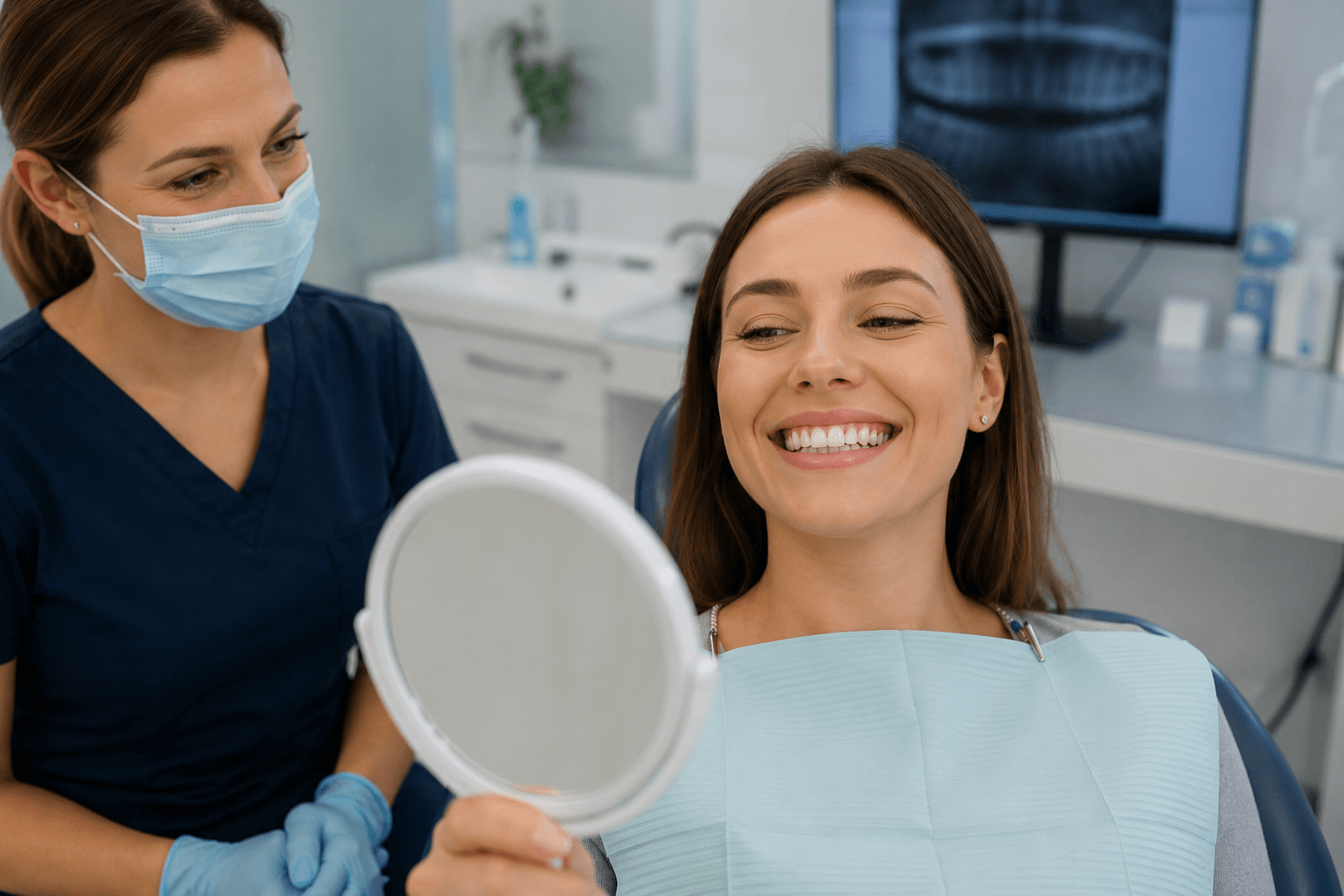
The most frequently asked question during teeth whitening consultations across the country, and every version of it, is simply this: "Will this actually work for me?"
It is a fair question. You may have seen the advertisements, browsed through social media posts, possibly even had a friend speaking enthusiastically about their results — yet when it comes to your own teeth, there is always that quiet doubt at the back of your mind asking: "But what if it does not work for mine?"
So let us address that directly. Professional teeth whitening works. It has successfully treated millions of individuals across the United Kingdom and around the world, consistently providing a treatment that produces noticeable, real results for people regardless of their age or starting point. https://chelmsford.lateethwhitening.co.uk/before-after-laser-teeth-whitening-results/ That is not a sales pitch or a misleading claim — it is simply what happens when advanced cosmetic science meets with proper clinical techniques in the hands of an experienced professional.
But results vary. They depend on things that are specific to your diet, your habits, your age, your genetics, and the health of your current teeth. That is precisely why this page exists — not to make unrealistic promises, but to give you an honest, practical, visual understanding of what teeth whitening results genuinely look like.
Whether you are someone who has enjoyed a regular cup of tea for years and noticed your teeth gradually yellowing over time, or perhaps a coffee enthusiast who has watched as their smile slowly darkened through the years — this page is for you. You can read how results should be understood, what types of staining respond best to treatment, how the process works, and what clients are saying about their own experiences. No exaggeration. Simply a straightforward account of teeth whitening outcomes.
Right from the start, one important detail to mention is the VITA shade guide, which is regarded as the standard reference guide for natural tooth colours. Professionals utilise it to accurately determine where your teeth rest before and after treatment. Most clients achieve a four to twelve shade improvement. That is a significant, clearly visible change — the kind you notice when looking in the mirror and the kind other people notice when you smile.
But beyond the numbers, the true result is a feeling. You look in the mirror and you realise, with genuine satisfaction, that your smile looks wonderful.
You may have come across the term "shades whiter" at some point while exploring teeth whitening options. So what does that really mean? How do professionals assess the colour of your teeth, and how do they measure the improvement following treatment?
The answer lies in the VITA shade guide. This is the most widely used and commonly recognised tooth colour reference system used around the world in cosmetic dental work, and it has been the industry standard for many decades. https://chelmsford.lateethwhitening.co.uk/am-i-suitable/ Think of it as a carefully organised colour chart — a spectrum of tooth shades composed entirely of samples that have been meticulously arranged from dark to light.
The VITA guide classifies tooth colours into four main hue families: A shades are more reddish-brown, B shades are more reddish-yellow, C shades tend towards grey, and D shades sit in the reddish-grey range. Each family has numbered variants — A1 is lighter whilst A4 is darker. Before you even begin the process, a professional takes the shade guide and places it next to your teeth to determine your current tooth colour. They do the same thing after treatment, and the difference tells you how many shades lighter your teeth have become.
So when someone says they have gone eight shades whiter, it means their teeth have moved eight places along the spectrum towards the brighter end. The difference between an A3.5 — a noticeably muted or yellowish-brown colour — and a B1, which is a bright natural hue, is genuinely striking. This is the type of transformation that makes you appear healthier, younger, and more refreshed.
The shade you begin at is influenced by many individual factors. Genetics play a role — some people are simply born with thicker, whiter enamel whilst others start out with teeth that appear more yellow or grey. Diet matters as well. Years of tea, coffee, and red wine leave their mark. Smoking adds another layer of discolouration. Certain medications, particularly tetracycline antibiotics taken during childhood, are associated with deep internal staining. And naturally, age is a factor — the outer enamel gradually wears thinner over time, allowing the darker dentine beneath to become more visible.
None of this assessment happens after treatment has begun. A responsible professional will always assess your current shade and explain what difference can realistically be achieved beforehand — making certain you understand exactly what to expect well before the whitening gel touches your teeth.

Every smile that comes through the door brings with it its own story. That is one of the most rewarding aspects of teeth whitening — no two clients are ever the same, and neither are there ever results that exactly replicate another. However, there are patterns, commonalities across certain client experiences, and understanding these can help set realistic expectations for what professional teeth whitening may achieve for you.
Without a doubt, this is the most common client profile in the United Kingdom. It makes sense when you consider that we are a nation sustained by tea and coffee. The average person in Britain enjoys around three to four cups of tea every single day, before you even consider the morning latte, the afternoon espresso, or the after-dinner coffee. Those daily cups steadily build a layer of surface staining through the years that accumulates so gradually you barely notice it happening. Then one day, you might look at an older photograph of yourself and think, "My teeth used to look so much brighter than that."
The encouraging news is that this type of staining — surface-level discolouration caused by tannins in tea, coffee, and similar beverages — responds particularly well to professional teeth whitening. These are called extrinsic stains, which means they sit on or near the surface of the enamel rather than deep within the tooth structure. In this situation, a full professional treatment in a single appointment usually achieves a lightening of between six and ten shades. The whitening gel works to break apart the yellow or brown tones that have developed over time, revealing a clearer, brighter, and more natural-looking tooth underneath.
What these clients consistently find surprising is how immediate the change is. The most rewarding aspect is this: one hour earlier, they arrived with tired, dull-looking teeth, and now they see a smile that genuinely appears years younger. It is one of those results where, once you experience it, you cannot quite understand why you waited so long.
Smoking stains present a different challenge altogether. Whereas tea and coffee typically leave a warm yellow tinge, years of smoking leave a deeper, more stubborn discolouration — often brownish in colour, sometimes with a grey hue running through it, frequently concentrated along the edges of the teeth or within the small spaces between them. The tar and nicotine in cigarettes are among the most persistent staining agents you will encounter, adhering to enamel in a way that regular brushing alone does not fully address.
Smoking stains are certainly more challenging, but they do not fall outside the reach of professional teeth whitening, which can and does deliver meaningful improvement. The degree of change is influenced by how heavily and for how long someone has smoked, and the process may sometimes require a more intensive approach. Regardless, the results are still quite impressive. The majority of long-term smokers find that they achieve an improvement of four to eight shades, and that represents a very real visual difference. Teeth that previously appeared discoloured and dulled suddenly look considerably cleaner, healthier, and more presentable.
Interestingly, smokers are often among the most pleasantly surprised and most satisfied with their results. They tend to arrive expecting only a marginal benefit, and they leave genuinely delighted with the extent of the change.
This one can catch people off guard because the change in colour happens so gradually. Over time, the enamel of our teeth wears down and becomes thinner. Enamel is the hard, white outer shell of the tooth, and beneath it sits the dentine, which is naturally a more yellow-toned material. As the enamel becomes thinner, the dentine becomes increasingly visible through the more translucent outer layer, producing a warmer, darker, and more yellow appearance to the teeth. This process is entirely natural, yet it can make a person appear older and leave them feeling self-conscious about their smile.
For this group, teeth whitening lightens the remaining enamel and reduces the visual effect of the dentine colour showing through from underneath. The results can be genuinely rejuvenating. Many clients in their fifties, sixties, and even seventies report that a brighter smile makes their whole face appear fresher and more youthful. The aim is not to look as though extensive cosmetic work has been carried out — it is simply to bring back a natural brightness that time has slowly taken away.
Weddings. Job interviews. Milestone birthdays. Holidays. Reunions. These are the clients who may not have significantly stained teeth at all, but for whom a gentle boost of confidence before an important occasion can make a considerable difference. Even if their teeth would otherwise be considered perfectly acceptable for everyday purposes, they want them to look their very best — and professional teeth whitening is ideally suited to achieve that.
For these clients, the results are often subtle but profoundly meaningful. An improvement of three to six shades may not sound remarkable in words, but when you compare teeth that look "acceptable" with teeth that look genuinely bright, healthy, and polished, the difference in someone's confidence is significant. These are the clients who return after their event and say things like, "I smiled in every single photograph," or, "I felt like a completely different person."
And then there is the person who very nearly did not come at all. The one who read every review, asked every question, and still was not entirely convinced that it would work for them. Perhaps they had tried whitening toothpastes that made no discernible difference. Perhaps someone had told them it was uncomfortable. Perhaps they simply believed their teeth were beyond improvement.
These are the clients who walk away with the biggest smiles — not only because of the physical improvement, but because of the relief. Their treatment proved easier than they had ever expected. It turned out better than they had dared to hope. What had been put off for months or even years turned out to be the most straightforward and most satisfying thing they had done for themselves in a long time.
More often than not, that is precisely how the story unfolds.
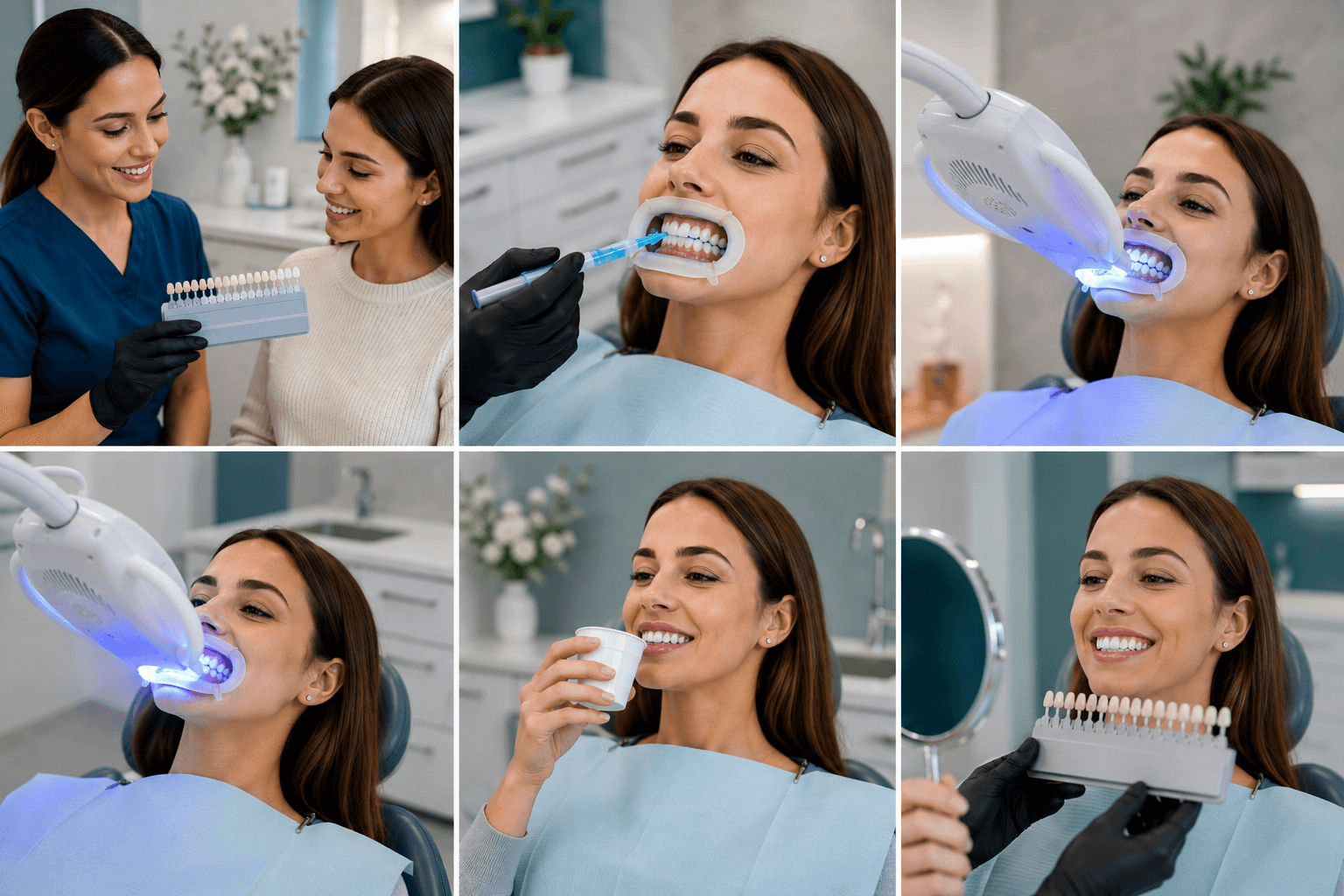
Despite the clearly visible results, teeth whitening is a surprisingly straightforward process. To put any concerns at ease, it is helpful to understand exactly what happens during a professional treatment session — so let us walk through the procedure together step by step.
A highly trained practitioner will sit down with you and conduct a thorough assessment before applying any whitening gel to your teeth. They will examine the condition of your teeth and gums, determine your current shade on the VITA guide, discuss what you hope to achieve from the procedure, and confirm that you are a suitable candidate for treatment. This is also the moment when you should raise any questions or concerns you may have — and a good professional will welcome every single one of them.
Following the assessment, if you wish to proceed, the treatment itself begins. The sensitive gums and lips are carefully protected, often with a barrier gel or soft cover that ensures only your teeth receive the whitening agent. This step is essential — it safeguards all adjacent soft tissue from any discomfort throughout the entire session.
The whitening gel, which is the active agent responsible for lightening your enamel, is then carefully applied to the surfaces of your teeth. Depending on the system being used, the precise formulation of this gel may vary. The gel is designed to penetrate the porous outer layer of your enamel and dissolve the stain molecules within it.
This is where the technology plays its part. After the gel has been applied, a specialised light — typically either laser or LED — is positioned over your teeth. This light activates the gel and accelerates the chemical process that breaks down stains. Whether it is referred to as laser teeth whitening, LED teeth whitening, or light-activated whitening, the underlying principle is the same. The whitening is not performed by the light itself; rather, the light intensifies and speeds up the effect of the gel.
The activation period generally takes place in intervals of fifteen to twenty minutes, and most sessions comprise two to three cycles. The entire procedure normally takes around one hour from start to finish, from sitting down to walking out with a new smile.
As far as sensation goes, most clients report that the experience is perfectly comfortable. Some may notice a mild tingling sensation during the light activation phase, and a small number may experience slight sensitivity during or immediately after treatment. The reality, however, is that for the vast majority of people, the procedure is genuinely comfortable. Many clients find it very straightforward — simply sit back, let the practitioner manage the process, and then see the results.
The results are visible straight away. After the final cycle, the gel is removed and you see your new smile for the first time. There is no waiting period, and there is no gradual development. The change is there and then. The shade guide is brought out once more, you are matched again, and you can see the actual difference in person. It really is that straightforward.
The concern that sits at the top of nearly everyone's list — and understandably so — is safety. You do not want to risk the health of your teeth. So the question of safety deserves to be addressed thoroughly and with complete honesty, because it warrants a careful, comprehensive answer.
The short answer is this: professional teeth whitening, performed by a trained and qualified professional, is a safe cosmetic procedure with an extensive body of evidence supporting its use. This practice has been a part of cosmetic dental care for over three decades, and the products and techniques used today are increasingly sophisticated, gentler, and more effective than ever before.
However, the short answer alone is rarely sufficient to put a thoughtful person's mind completely at rest. So let us explore the key areas in greater detail.
Of the many concerns associated with teeth whitening, potential damage to enamel — the hard, protective outer layer of the tooth — is perhaps the most common. This is entirely understandable. Since enamel cannot regenerate once it has been damaged, anything that could compromise it is a legitimate concern. However, the reality is that professional whitening uses gels that are specifically designed to interact safely with enamel. The gel is able to penetrate the porous surface of the enamel and reach the stain molecules beneath, but it does not erode, weaken, or permanently alter the enamel structure itself. Clinical research consistently confirms this, and it is one of the reasons professional products are formulated and tested to such a rigorous standard.
Sensitivity is likely the second most common concern, and one that deserves to be answered with complete honesty. Yes, some people do experience mild sensitivity during or after teeth whitening treatment. This is not unusual, and it does not mean that anything is going wrong. The whitening process temporarily opens the pores in your enamel, which can cause a small degree of increased sensitivity to temperature in the nerves within the tooth. For the majority of people, this manifests as a short-lived mild tingling sensation or a brief moment of discomfort when consuming something particularly hot or cold. It typically resolves within twenty-four to forty-eight hours.
A skilled professional will always tailor the treatment for patients who are more prone to sensitivity — possibly using a lower concentration gel, shorter activation cycles, or applying a desensitising agent before and after the session. The aim is always to deliver the best possible result without ever making you feel uncomfortable.
The gum tissue is carefully protected throughout the entire procedure. Before the whitening gel is applied, a protective barrier is placed along the gum line to ensure that only the surfaces of the teeth come into contact with the whitening agent. This additional layer of protection prevents any irritation to the soft tissue and is a standard component of all professional treatment protocols.
Whitening is an effective procedure that works well on natural teeth, but it is important to understand that it will not change the colour of dental restorations. Crowns, veneers, bridges, and fillings will not respond to the whitening process. If you have visible restorations in the area of your smile, a professional will discuss this with you during the consultation so that you can fully understand your options. As a precautionary measure, teeth whitening is also typically not recommended for women who are pregnant or breastfeeding.
Teeth whitening in the United Kingdom is regulated within the framework of cosmetic dentistry. Legally, only registered dental professionals, or their appropriately trained and supervised team members, may use whitening products containing more than 0.1% hydrogen peroxide. This regulatory framework exists to protect the public, and it is one of the reasons why it is so important to choose a reputable and qualified provider. When you visit a teeth whitening specialist who follows these guidelines, you can be confident that both the products and the procedures adhere to established safety standards.
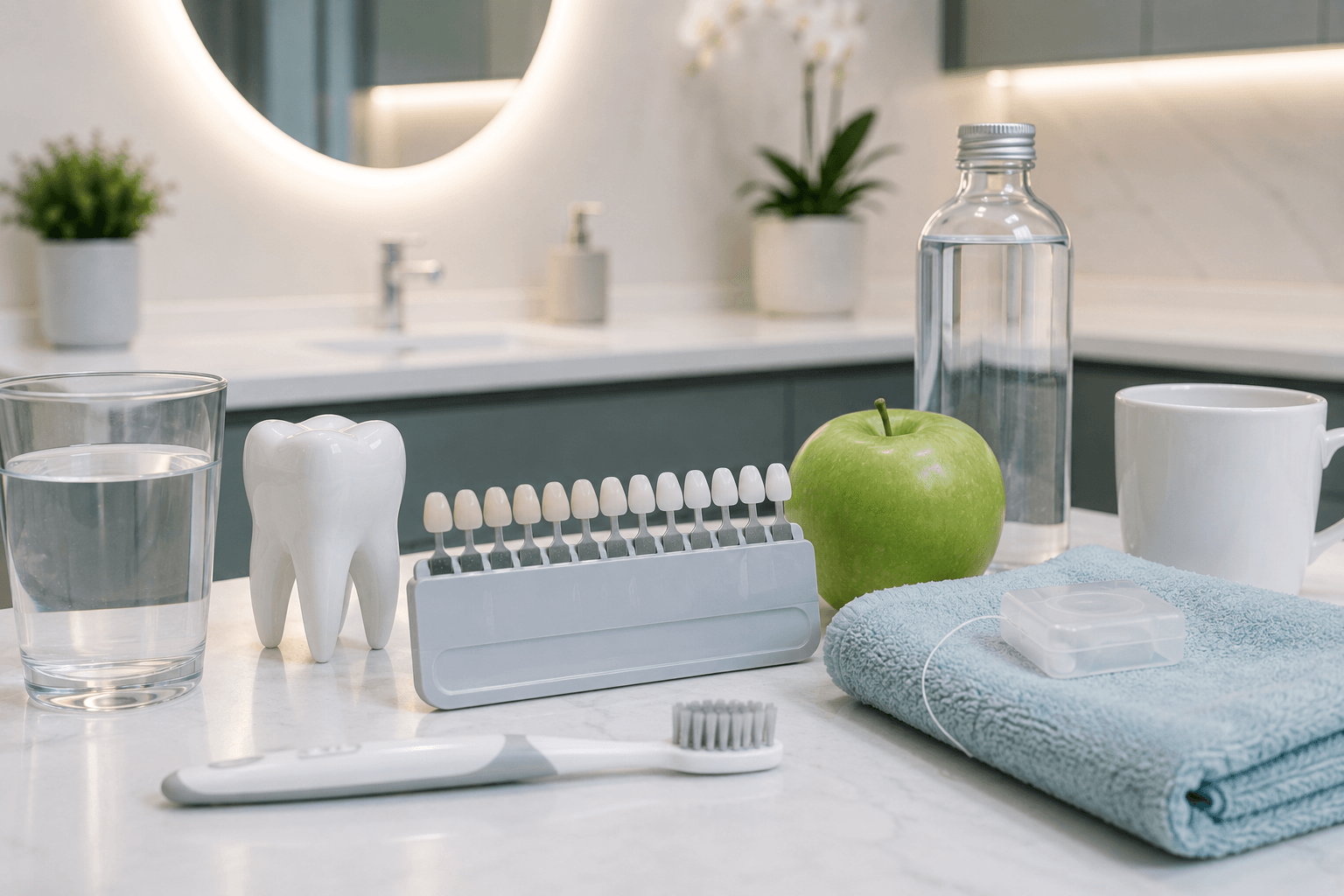
This question comes up without fail in every single consultation: "How long will it last?" And it is an entirely reasonable thing to want to know before you undertake any cosmetic treatment.
The honest answer is that how long your results last is largely determined by your lifestyle habits and the care you take after your treatment.
Generally speaking, results tend to last somewhere between six and eighteen months for most people. Some will notice a slow return of some discolouration sooner, whilst others maintain their brightness for an even longer period. The daily habits and choices you make usually account for the difference.
Tea, coffee, red wine, cola, and highly pigmented foods are among the most common contributors to surface staining over time. You certainly do not need to eliminate them entirely — particularly not here in the United Kingdom, where a good cup of tea is practically a way of life. However, being mindful of consumption, especially during the first forty-eight hours following treatment when the enamel pores are still open, will make a noticeable difference to how long your results are maintained.
The teeth of smokers will re-stain more quickly than those of non-smokers because of the constant exposure to tar and nicotine. Many people find that teeth whitening serves as a positive motivator to reduce or stop smoking, but even those who continue will notice that their teeth remain significantly brighter for many months following treatment.
Good oral hygiene is fundamental to maintaining results. This means brushing twice daily with a fluoride toothpaste, cleaning between teeth regularly, and attending routine dental appointments. A whitening toothpaste can also help maintain brightness between treatments — not powerful enough to replicate a professional result, but effective at preventing surface stains from building up.
Many clients opt for a maintenance session every six to twelve months to keep their smile looking its best. Think of it in the same way you might approach a haircut — regular, gentle upkeep rather than a one-off procedure. These maintenance sessions are typically shorter and less intensive than the initial treatment.
The most important point to understand is that no teeth whitening results are permanent, but they can absolutely be maintained. With sensible habits and an occasional professional touch-up, there is no reason why you cannot enjoy a brighter smile for years to come.
Tooth discolouration is not the same for everyone. Before exploring this topic further, it is important to understand what type of staining you may be dealing with, because this directly influences how effective teeth whitening will be. Let us explain the key distinctions in straightforward terms.
Extrinsic stains are surface-level marks that reside on or just above the external layer of the enamel. These are caused by external factors — the things that come into regular contact with your teeth on a daily basis. The most common contributors in the United Kingdom are tea, coffee, red wine, dark foods and sauces, tobacco, and certain mouthwashes that contain chlorhexidine.
This is the category where professional teeth whitening delivers its most impressive results. Since the discolouration is found on or near the surface, it can be effectively reached and broken down by the whitening gel. Clients with predominantly extrinsic staining tend to experience the most significant colour improvement, typically achieving between six and twelve shades of lightening. Results are generally immediate, clearly visible, and very satisfying.
If your teeth have gradually become more yellow or brown over the years as a result of everyday food and drink, there is a very strong likelihood that you are experiencing extrinsic staining, and teeth whitening will very probably deliver excellent results for you.
Intrinsic stains originate from within the tooth structure itself — specifically in the dentine layer that sits beneath the enamel. They can occur as a result of certain antibiotics taken during childhood (particularly tetracycline), excessive fluoride exposure during tooth development (known as fluorosis), trauma to a tooth, or the natural process of ageing.
Intrinsic stains typically present as greyish, bluish, or deep brown discolourations that do not respond as readily to surface bleaching. Professional teeth whitening can certainly improve the overall appearance — it will brighten the enamel overlying the staining and reduce the overall level of discolouration — but the degree of improvement may not be as dramatic as with extrinsic staining.
If you suspect you have internal discolouration, it is important to raise this during your consultation. An experienced professional will carefully assess the nature of the staining, provide you with an honest outlook, and if necessary, recommend additional or alternative treatment options. Transparency is essential — no one should promise results that cannot realistically be delivered.
Walk into any chemist on the high street and you will find an entire shelf dedicated to teeth whitening products. Strips, gels, pens, trays, charcoal powders, and LED devices — the selection is extensive. And many of them do produce some level of improvement. So the natural question is: what exactly makes a professional treatment different?
The answer comes down to three key factors: strength, precision, and expertise.
Professional whitening gels are formulated at concentrations significantly more effective than any product available over the counter. The maximum concentration of hydrogen peroxide that can be sold directly to consumers is regulated in the United Kingdom, meaning shop-bought products are considerably milder by design. This regulation exists for safety reasons — higher concentrations require careful, supervised application — but it also means that at-home products simply cannot match the depth or speed of results achievable with professional treatment.
When you apply a whitening strip or use a generic, one-size-fits-all tray at home, you are using a product designed for the average mouth, not yours. Professional treatment involves precise, targeted application — the practitioner can see exactly where to apply the gel, ensure it reaches the areas that need it most, and in the correct amount for the appropriate duration. The gums are carefully protected. The coverage is even and consistent. This precision translates directly into a more uniform, natural-looking result across all the visible teeth.
An experienced practitioner will assess your teeth, identify the type and extent of staining, evaluate your suitability for treatment, and determine the ideal approach for your individual circumstances. They supervise the entire process, make adjustments as needed, and ensure everything is as comfortable and safe as possible throughout. This level of clinical judgement is simply not available with a home kit.
Home kits have their place for light staining and maintenance between professional appointments. However, for a truly significant improvement, professional whitening remains the most effective and reliable approach.
Here is what the shade guide can never measure and no before-and-after comparison will ever fully capture: the way a brighter smile transforms how a person feels about themselves.
Having been involved in teeth whitening for many years, it is not the numbers that stand out most in memory — it is the way a client looks when they first see their results. There is that brief moment of surprise. Then the smile — often the widest, most unguarded smile they have shown in months. And then, almost invariably, words along the lines of: "Are those really my teeth?"
It might sound like a small thing. The colour of your teeth. But in reality, your smile is one of the first things other people notice about you, and very likely one of the first things you observe about yourself every time you stand in front of a mirror or share a laugh with friends.
Self-consciousness about teeth leads to habits that you may not even be fully aware of. Smiling with closed lips. Covering your mouth when you laugh. Avoiding being photographed. Being less inclined to speak up in professional settings. Holding back in social situations.
When teeth whitening removes that barrier, the change is far more than physical. Clients consistently report feeling lighter, more open, and more willing to engage. They begin to smile freely in photographs again. They laugh without restraint. They walk into a room feeling like the most confident version of themselves.
Clients have shared that their results gave them the confidence to pursue a promotion they had been considering. Some say it positively influenced their willingness to start dating again. Parents have expressed gratitude, saying they can finally smile naturally in family photographs. It is remarkable how much of our self-perception is connected to the appearance of our smile.
This is not about vanity. It is about feeling comfortable and confident in your own skin. Wanting to feel good about how you look is entirely natural and healthy. A desire to smile freely and without hesitation is not superficial in the slightest.
The emotional impact of teeth whitening is real, it is powerful, and it is one of the most rewarding aspects of this work.
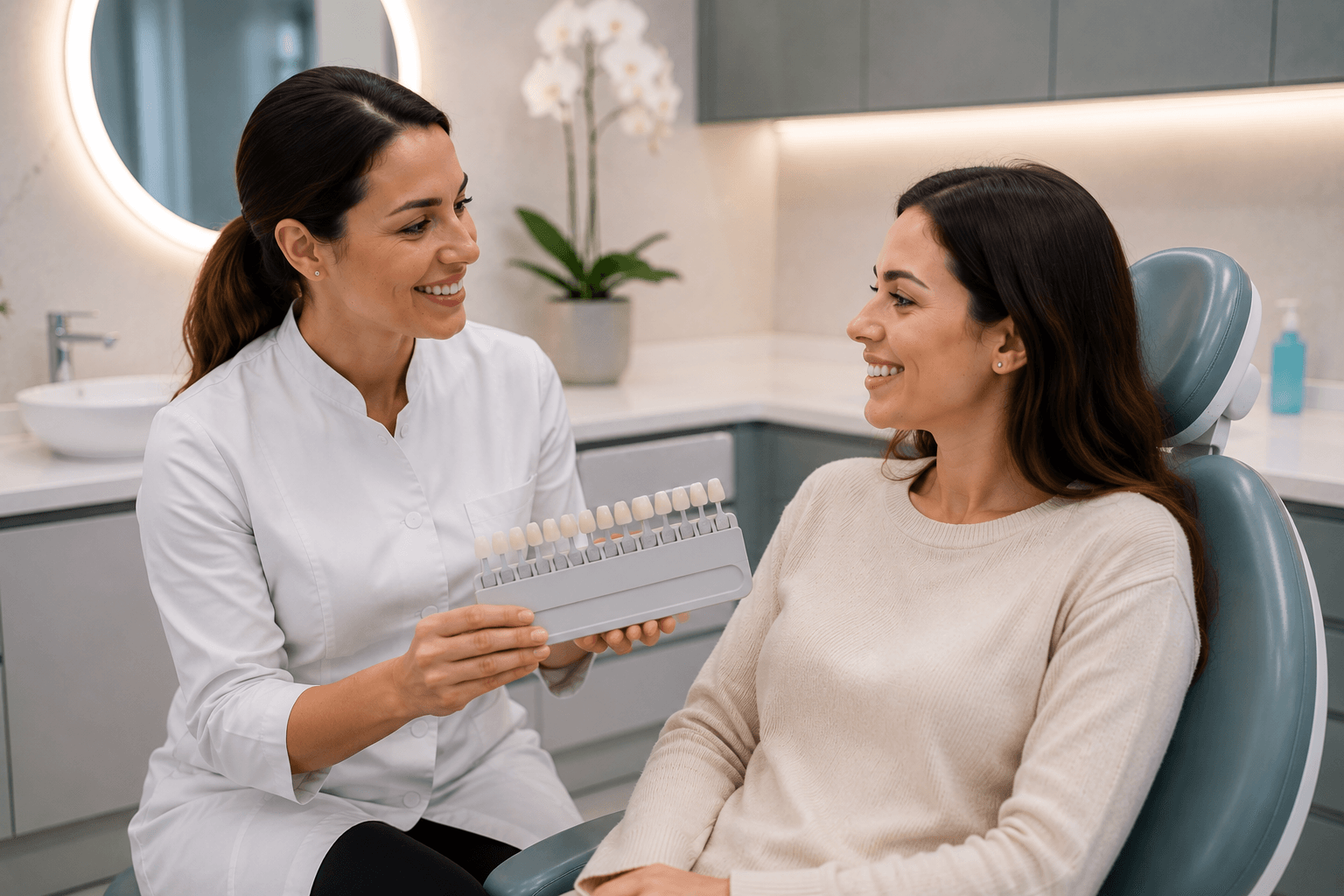
If you have read this far, it is clear that you are approaching this decision thoughtfully and with care — and that is a genuinely positive thing. Choosing to have your teeth whitened is a personal decision, and it deserves thorough, honest information and realistic expectations.
This page has hopefully demonstrated that professional teeth whitening is not a fleeting trend or an unreliable promise. It is an established cosmetic treatment that delivers real, visible results for the great majority of people. Whether your teeth have become discoloured through tea and coffee, darkened through smoking, dulled by the natural process of ageing, or simply are not as bright as you would like them to be — the chances are very strong that professional teeth whitening can help.
The key lies in finding a responsible, skilled practitioner who takes the time to assess your teeth properly — someone who understands the science behind the procedure, who communicates honestly so that your expectations are realistic, and who carries out the treatment with genuine care and competence. When those elements come together, the results genuinely speak for themselves.
A brighter smile is one of the simplest and most effective things you can do for your confidence. It does not require surgery or extensive recovery time. It simply allows the best version of your smile to come through — the one that has been quietly waiting, hidden beneath the everyday wear and tear of life.
Take your time. Do your research. Ask your questions. And when you are ready, know that a whiter, brighter, more confident smile is well within your reach.
That really is the essence of what teeth whitening results are all about.