Laser teeth whitening for a Brighter, Confident Smile

Professional smile brightening designed around you. Noticeable results in a single appointment with comfort and safety at the heart of every step.

If your smile feels dull, stained, or not as fresh as it used to be, you're in the right place. We help adults across the UK regain a brighter smile quickly, safely, and with minimal fuss. Our approach is practical, human, and professional --- we explain the process in plain language and help you choose what makes sense for your life.

Why Choose Us:

What is Laser teeth whitening?

Laser Teeth Whitening Process

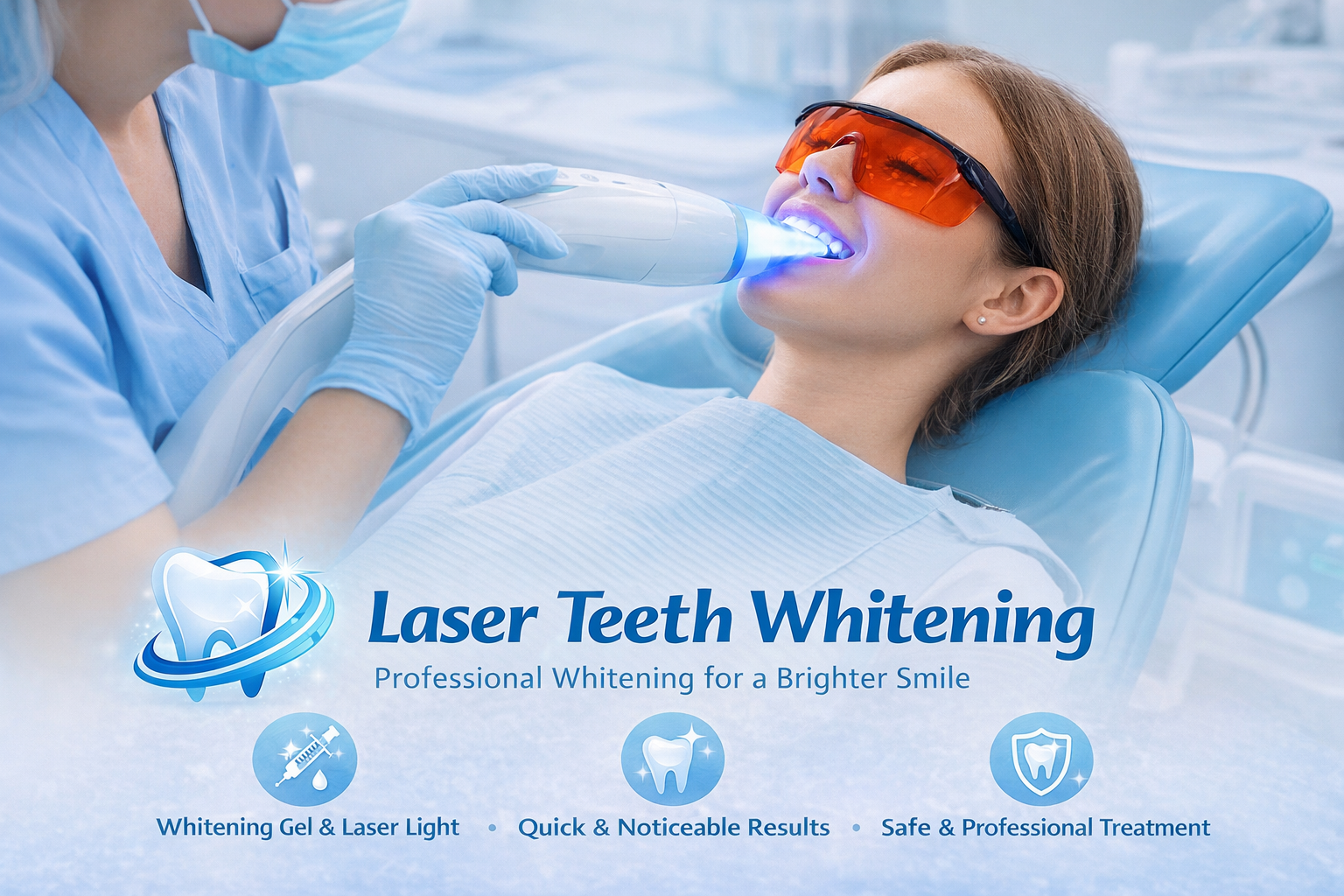
Laser teeth whitening is a professional, in-clinic cosmetic treatment that lightens the natural shade of your teeth by reducing both surface staining and deeper discolouration. During treatment, a carefully formulated whitening gel is applied to the tooth surfaces. A specialised light is then used to activate and accelerate the whitening agent, delivering a quicker, more noticeable result than most over-the-counter options.

The process is designed to be precise: lips and gums are protected, and the gel is applied only where needed. Most people notice a visible improvement immediately after the session. The treatment is usually recommended for adults with healthy teeth and gums who want a swift, effective way to brighten their smile. If you have crowns or large restorations, they won't change shade, so we discuss that during consultation. Sensitivity is a common concern --- we explain sensitivity management options and use protective measures to keep you comfortable throughout.

How it works:

Consultation:

We review dental history, examine your teeth, and discuss realistic goals.

Preparation:

Teeth are cleaned if needed, and gums and soft tissues are protected.

Treatment:

Whitening gel is applied and activated using a specialised light in short cycles.

Check & Finish

We check the shade, advise on aftercare, and answer any questions.

The clinical process is straightforward and follows careful steps, so you know what to expect. Systems and protocols vary slightly depending on the equipment used, but the common aims are the same: safety, comfort, and an effective, natural-looking improvement.

Benefits:

A brighter smile can lift mood, boost confidence, and help you feel more polished in social and work situations. This treatment is a quick route to noticeable improvement without complicated daily routines, and it fits well around busy lives --- many clients come during a lunch break or between meetings.

Before & After --- realistic expectations:

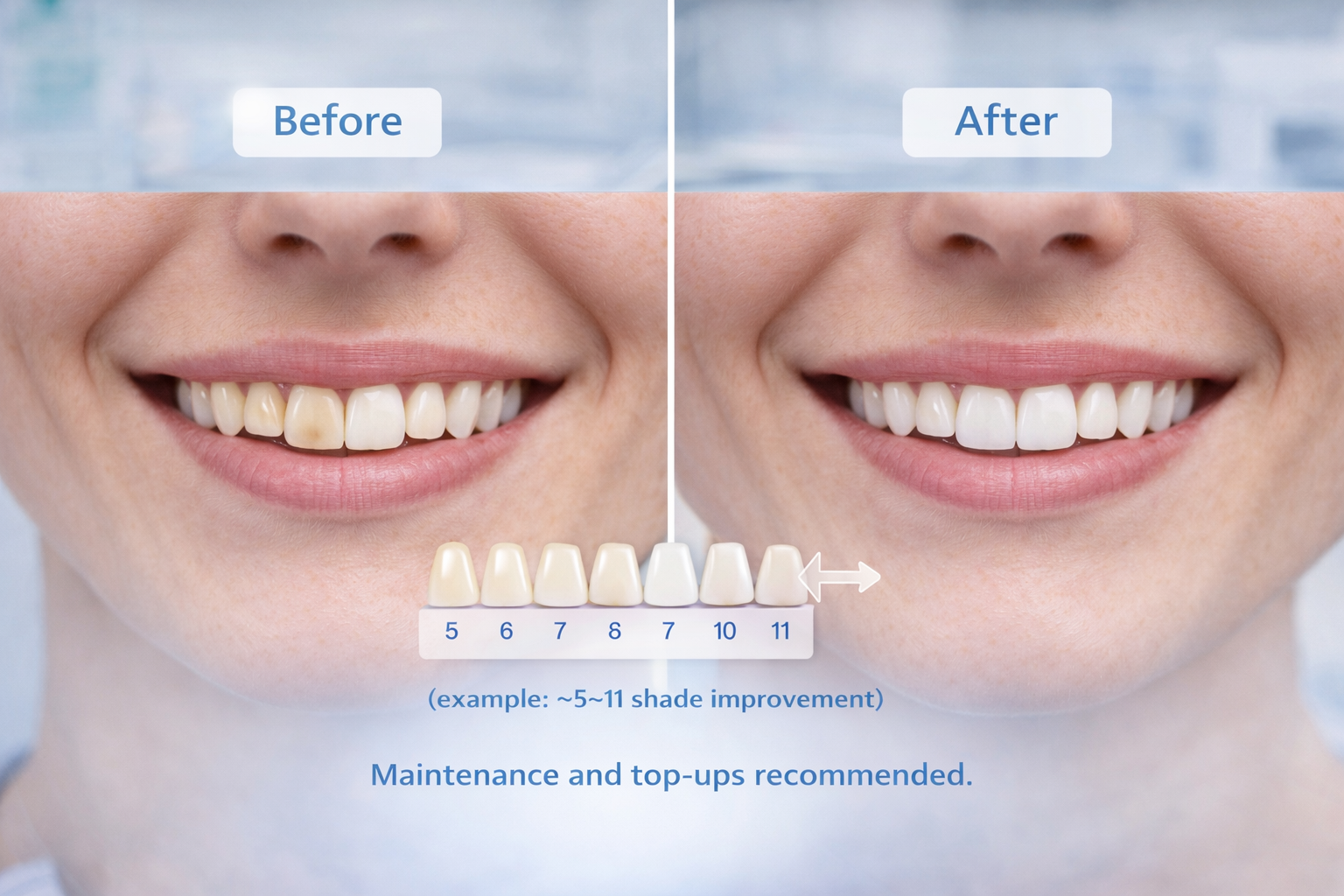
Before and After Laser Teeth Whitening Results

Results vary from person to person. Factors that affect the outcome include your starting shade, the cause of the staining, and whether you have restorations, such as crowns or veneers, that won't change colour. Many clients notice a clear change immediately after treatment (example: some people report a 5--11 shade improvement), though exact numbers are not guaranteed. We prefer to set realistic goals --- often a natural, noticeably brighter smile rather than an unnaturally white finish.

Maintenance is simple: avoiding strong-staining foods and drinks in the hours and days after treatment helps, and occasional top-ups can keep your smile looking fresh. If you want a very exact shade match to prosthetic work, we'll plan that in advance so your results are consistent with any dental restorations.

Who is it suitable for?

We don't usually recommend whitening for children or teenagers unless a dental clinician advises otherwise, and some medical conditions or medications may require professional input first. We'll cover all of that in your consultation.

FAQs:practical questions and answers.

Is Laser teeth whitening safe?

+

Yes --- when delivered by trained professionals, it's generally safe for suitable adults. We perform a screening first, protect gums and soft tissues, and monitor the process to keep everything controlled and comfortable.

Will it hurt or cause sensitivity?

+

Most people find the procedure manageable. Some experience temporary sensitivity after treatment, but this typically subsides within a few days. We offer sensible strategies such as desensitising products and shorter exposure times to reduce discomfort where needed.

How long do results last?

+

Results can last several months or longer, depending on diet, smoking habits, and oral hygiene. Occasional top-ups or touch-ups help maintain the shade. Avoiding staining foods and using a whitening toothpaste from time to time can also help prolong results.

How many sessions will I need?

+

Many people are happy after one session, particularly before an event. Others choose follow-up visits for additional brightening or maintenance. We'll advise on the best plan for your goals during your consultation.

Do you offer a mobile service?

+

Mobile appointments may be available in some areas. This depends on logistics and clinical suitability. If a mobile visit isn't recommended, we'll explain why and suggest the best clinic-based approach instead.

Treatment details --- what to expect during your visit:

The treatment appointment is structured to be straightforward and reassuring. On arrival, we check your recent dental history and take a look at your teeth. If a quick clean is needed to remove surface debris, we do that first --- it helps the whitening gel contact the tooth surface evenly. Your gums and lips will be retracted and protected with a barrier, and the whitening gel will be applied to the tooth surfaces in controlled amounts.

The light is then positioned to activate the gel for set time periods, commonly in a few short cycles with brief checks in between. The whole in-clinic process is usually about 45--75 minutes, depending on the system used and the desired level of brightening. We prioritise comfort: if you feel any sensitivity during the session, we can pause and apply measures to reduce it. After treatment, we review the shade change and give you specific aftercare steps so you get the best longevity from your results.

Remember that dental restorations such as crowns, bridges, and veneers do not respond to whitening in the same way as natural enamel. If you have front restorations, we will talk through the options so your smile looks even and natural. Treatment is personalised, and we always work to create a result that suits your face, skin tone, and personal preferences.

Aftercare --- first 48 hours (do's & don'ts):

Following sensible aftercare for the first 48 hours helps your results settle and reduces the chance of extra sensitivity. Keep it simple and steady:

We'll provide personalised guidance after your appointment so you know exactly what's best for your situation.

Pricing & offers:

Contact for current prices and available offers.

Testimonials:

"Such a quick appointment, and my teeth looked brighter straight away. The staff were warm and explained everything clearly." --- A. J. (Sheffield)

"I had this before a wedding and honestly couldn't stop smiling in the photos. Felt natural and not overdone." --- L. M. (Leeds)

"Everything was explained well, and there was no pressure. Results looked natural and lasted well with simple care." --- R. T. (Manchester)

Designed Around Your Smile:

If you value a quick, effective way to refresh your smile, Laser teeth whitening offers an approachable option that fits into busy lives. We aim for natural-looking results that make you feel more confident --- not an artificial, over-whitened look. The best first step is a clear consultation, so you know what to expect, what's realistic for your teeth, and whether any preparatory dental work is needed.

Free consultation is typically provided so you can ask questions and see realistic before-and-after examples for people with similar starting shades.

Causes of tooth staining

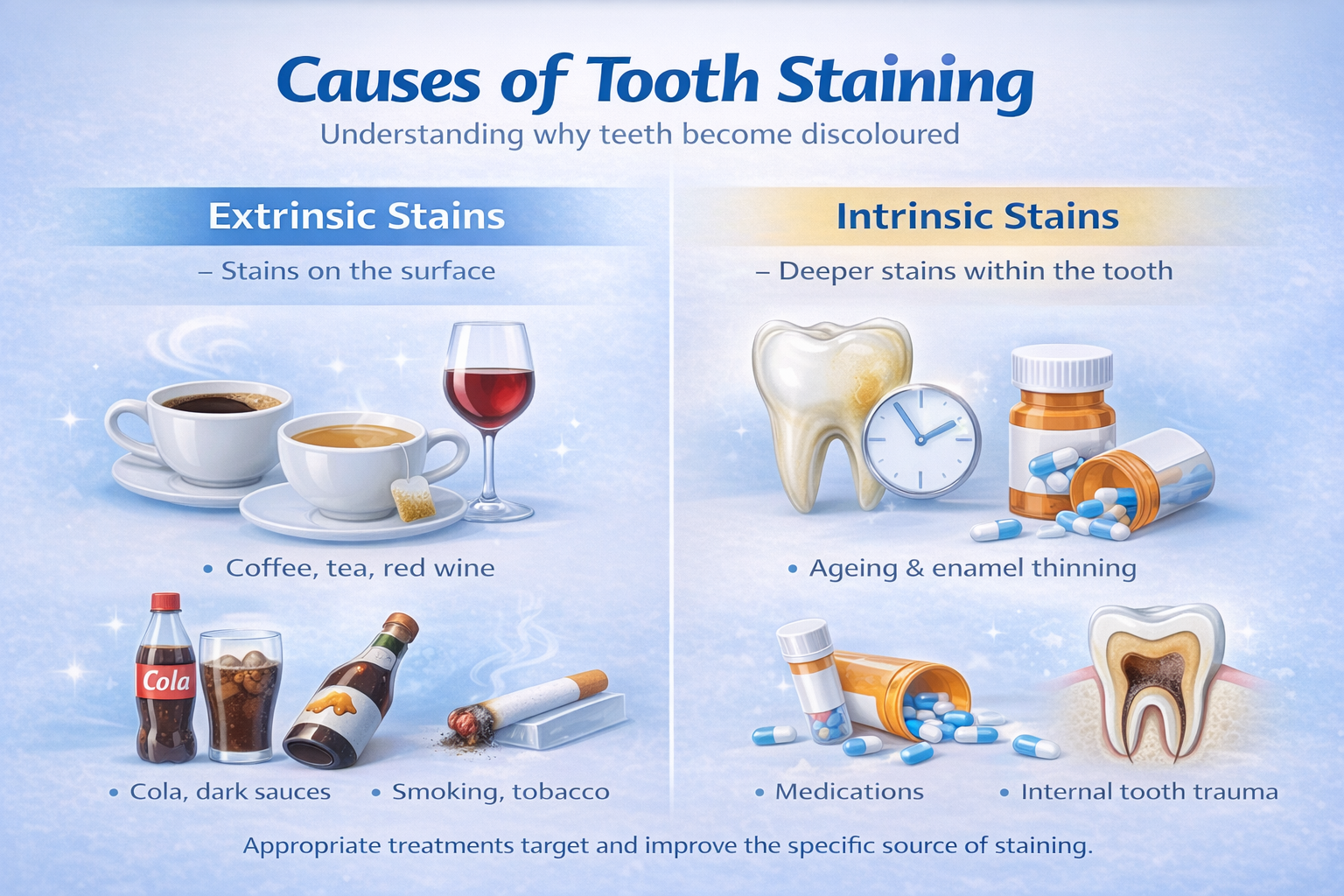
Causes of Tooth Staining

Tooth discolouration happens for many reasons, and understanding what causes staining helps you choose the right approach. There are two broad types: extrinsic staining, which sits on the tooth surface and usually comes from foods, drinks, or tobacco; and intrinsic staining, which is deeper and can be due to ageing, certain medications, or trauma that affects the internal structure of the tooth.

Common culprits include highly pigmented foods and beverages --- coffee, tea, red wine, cola, and richly coloured sauces --- which gradually deposit pigments on enamel. Smoking and tobacco use are major contributors, too, leaving persistent brown or yellowish stains that can be stubborn. As we age, enamel thins slightly, and the underlying dentine, which is darker, becomes more visible, making teeth appear duller despite good oral hygiene. Some antibiotics given during tooth development can cause intrinsic banding or uniform discolouration that requires specific attention.

Knowing the source of staining helps set realistic expectations. Surface stains usually respond well to light-activated bleaching because the whitening agents can break down the pigment layers. Deeper, intrinsic stains may improve less dramatically and sometimes need a combination of treatments, such as internal bleaching for a single dark tooth or cosmetic restorations if the discolouration is due to non-vital teeth or long-standing restorations. We'll discuss your specific situation at the consultation and explain the most appropriate pathway for improvement.

Choosing a natural shade

A key part of planning any cosmetic brightening is choosing a shade that looks natural for your face and skin tone. The goal for most people is a freshened, natural-looking smile rather than an uncomfortably white effect. Factors we consider when suggesting a shade include your natural baseline colour, hair and skin tone, and the overall look you're aiming for.

During consultation, we use a shade guide --- a series of numbered or lettered tabs that show different levels of whiteness --- to help you visualise likely outcomes. Rather than aiming for the absolute lightest tab in a generic guide, we work with you to pick a result that enhances your features. For example, very pale, opaque shades may look out of place on warmer complexions, while a moderate brightening can create a more flattering, confident appearance.

If you have restorations in the front, we'll consider whether replacement or matching of those elements should form part of the plan. Achieving a balanced result might mean whitening natural teeth and then replacing or recolouring crowns or veneers to match, so everything blends naturally in the smile line.

Pre-treatment checklist

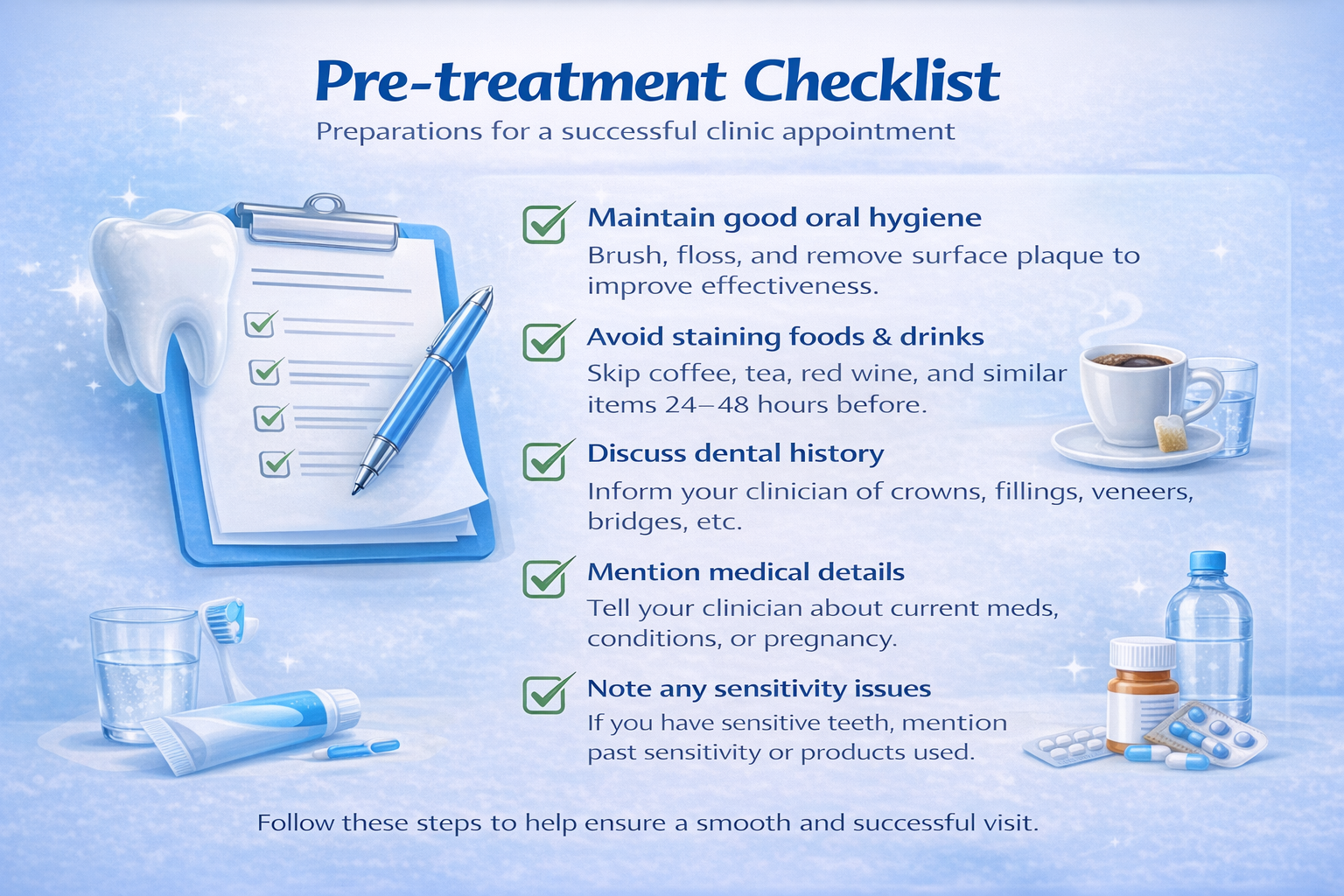
Pre-treatment Whitening Checklist

Before any clinic appointment, there are practical things that improve the experience and the outcome. First, maintain your usual oral hygiene in the days leading up to treatment; a professional polish isn't always required, but removing surface plaque ensures the whitening agent contacts enamel evenly. Avoid heavy-staining foods or drinks for 24--48 hours beforehand if possible, which helps the technician see your true baseline colour.

Tell your clinician about any dental work you have --- crowns, veneers, large fillings, or bridges --- and about any sensitivity or recent dental symptoms. If you have untreated cavities or active gum disease, those issues are addressed first; bleaching active decay can cause pain and does not resolve the underlying problem. Also mention any relevant medical conditions or medications, particularly if you are pregnant or breastfeeding, as some clinicians choose to postpone whitening in those cases.

If you use prescription-strength products like topical fluoride or a professional desensitiser, bring those details. If you frequently experience sensitivity from cold foods or hot drinks, we'll discuss pre-treatment desensitising strategies to make the session as comfortable as possible. Finally, try to arrive hydrated and rested; the appointment is short, but feeling relaxed makes the whole process smoother.

What to bring to your appointment

Bringing a few simple things can make the visit easier. Comfortable clothing, a light snack for afterwards if you tend to feel sensitive to cold, and a list of any recent dental work or medications are helpful. If you have photographic evidence of a smile goal, such as a favourite smile from a friend or a photo of an event, show it --- that helps the clinician understand your preferences. Many people bring sunglasses if the treatment light is bright, and some clinics offer disposable eyewear.

If you are having mobile treatment at home, ensure your seating area has adequate lighting and a stable surface for the clinician's kit, and a clear space so the clinician can move safely around you. For clinic visits, a responsible adult can accompany you if you prefer support. Avoid wearing strong facial makeup that could smudge during retraction, and remove lipstick or heavy lip products before the clinician begins, as these can get in the way of accurate shade assessment.

Sensitivity management in depth

Sensitivity can be the most common post-treatment complaint, but there are several effective strategies to reduce or prevent it. Many clinics apply a desensitising agent to the teeth immediately after the whitening session; these contain compounds such as potassium nitrate or fluoride, which calm nerve endings and strengthen enamel. If you have a known history of sensitivity, the clinician may recommend a short course of desensitising toothpaste in the weeks before treatment or an in-chair application to reduce nerve response.

During the session, exposure times can be adjusted --- for some clients, a single shorter cycle gives good visible improvement with less chance of sensitivity, whereas others can tolerate standard cycles for slightly stronger results. If at any point you feel discomfort, speak up. We can pause the process, rinse and apply a protective gel, and then continue when you are comfortable. Many people report only a minor tingling or increased sensitivity to cold for 24--72 hours afterwards, which settles with gentle care and avoidance of extreme temperature foods for a short period.

Comparing professional whitening and over-the-counter options

There are many whitening options available, from supermarket strips and whitening toothpaste to dentist-provided take-home kits and in-clinic treatments. Over-the-counter products can offer modest brightening, especially for mild surface stains, but they usually use lower concentrations of active ingredients and lack professional supervision, which means results are slower and less predictable.

Take-home kits provided by dental clinicians offer a middle ground: customised trays made from impressions of your teeth and professional-strength gel that you use at home for a series of nights or shorter daily applications. These can deliver strong results over time but require patient compliance and proper tray care. In-clinic light-activated sessions typically use higher concentrations of whitening agents applied under direct supervision and can produce noticeable improvement in a single visit. The trade-off is speed versus control; in-clinic work is fast, while supervised home regimes allow gradual control and may reduce sensitivity risk.

A conversation during consultation will help determine which method best suits your schedule, sensitivity profile, and desired outcome. For example, if you prefer a single rapid improvement for an event, an in-clinic session may be ideal. If you prefer gradual control with a lower risk of sensitivity, a supervised at-home regimen might be the better option.

Common myths and facts

There are a few persistent myths about whitening that are worth addressing so you can make an informed decision. Myth: 'Whitening ruins enamel.' Fact: When used appropriately under professional supervision, whitening does not inherently damage enamel. The main issue is sensitivity, which is usually temporary. Clinicians take steps like barrier protection and monitored exposure times to safeguard teeth.

Myth: 'Whitening makes all teeth uniformly white.' Fact: Natural teeth vary in base colour and translucency; whitening tends to enhance the natural look rather than create a uniform artificial whiteness. Myth: 'Once whitened, teeth never stain again.' Fact: Teeth can pick up new staining from diet and habits; maintenance and occasional top-ups are part of realistic long-term care.

Myth: 'Home remedies like lemon or baking soda are safe and effective.' Fact: Acidic or abrasive home remedies can damage enamel and increase sensitivity. Always seek advice from a clinician before trying unconventional methods.

Anonymised case examples

Seeing how results might look for people with different starting points can be helpful. These anonymised examples reflect typical outcomes and the thought process that goes into planning treatment.

Case A: A professional in their thirties who drinks coffee daily and has noticed a gradual dulling. After a single in-clinic session and adherence to a 48-hour avoidance window for staining foods, they reported a natural-looking brightening that lasted several months before a light top-up.

Case B: A bride-to-be wanted a noticeable but not overly white look for wedding photos. We used a moderate activation cycle and aimed for a warm, flattering shade. The result was described as 'photogenic and natural' by the client, who said it boosted confidence without feeling fake.

Case C: An older adult with slight thinning of enamel and an old crown on a front tooth. We achieved brightening of the natural teeth and then discussed a simple replacement or veneer plan for the crown to match the new shade, ensuring the final smile was balanced.

These illustrations show that planning is individual and can include combinations of whitening and restorative options when needed.

How to prolong results

A few sensible habits help results last longer. Rinse or brush shortly after consuming staining drinks where practical, or use a straw for beverages such as cola or iced coffee to reduce fluid contact with front teeth. Avoid smoking or tobacco use, and try to limit frequent snacking on darkly pigmented foods. Regular dental check-ups and professional cleans remove surface deposits before they become stubborn stains.

When you notice the shade gradually returning, short, clinician-supervised top-ups work well. Some people use whitening toothpaste intermittently to help maintain brightness; choose products recommended by dental professionals and avoid excessive reliance on abrasive whitening pastes. A careful, consistent oral hygiene routine with regular fluoride exposure protects enamel and supports a lasting effect.

Environmental and safety notes

Modern professional clinics follow hygienic and environmental standards. Disposable barriers, sterilised instruments, and proper waste disposal are routine to ensure safety and infection control. Clinics that offer mobile services bring portable equipment, which is used in a controlled manner and cleaned between appointments.

From an environmental point of view, choose clinics that use biodegradable disposables where possible and minimise single-use plastics. Many practices now follow sustainable protocols for packaging and recycling. You can always ask a clinician about their hygiene and sustainability practices if this is important to you.

Handling restorations and cosmetic planning

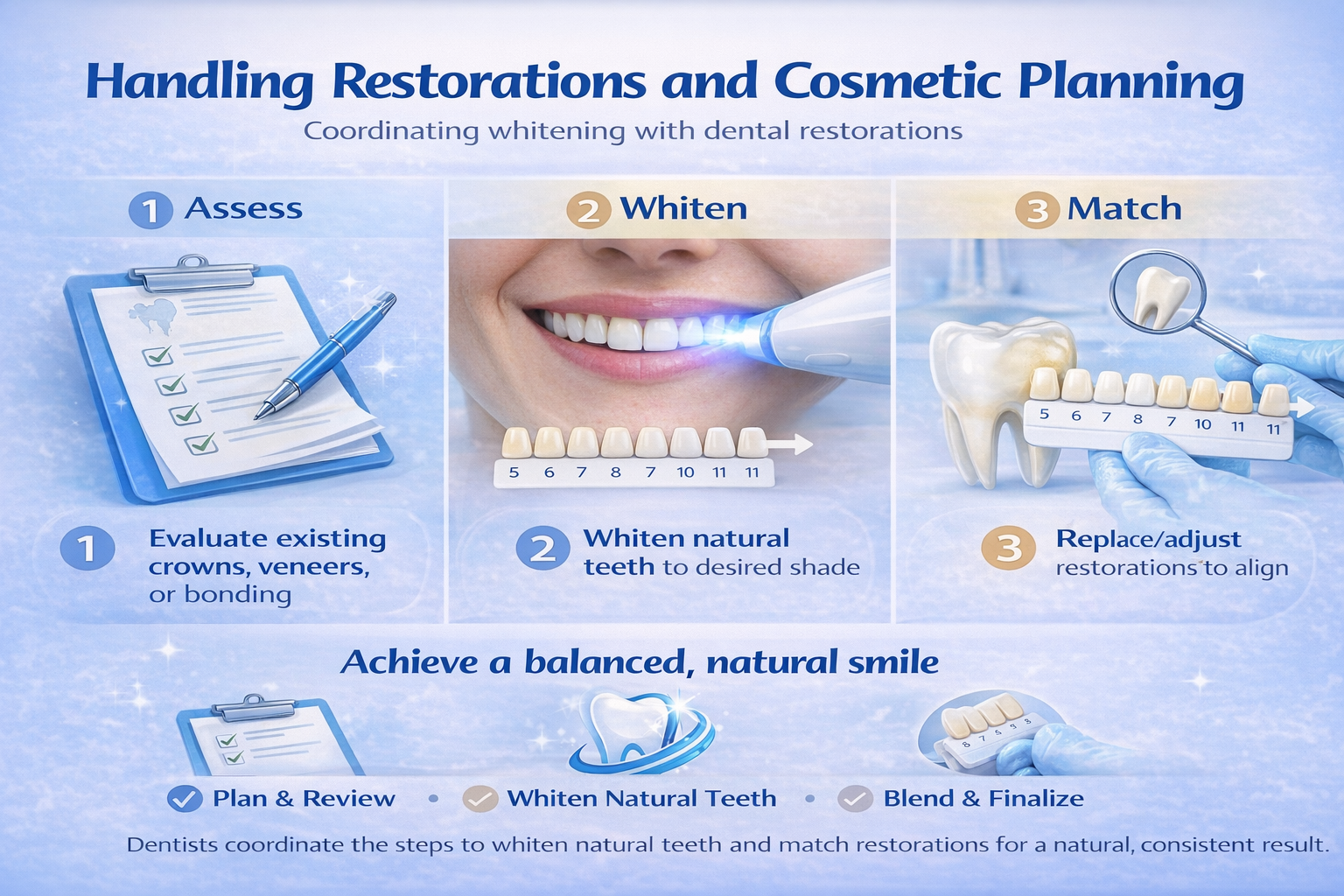
Restorations and Cosmetic Planning

If you have crowns, veneers, or bonding on front teeth, these materials do not change shade with bleaching products. That means if you whiten your natural teeth, the restorations may eventually look too dark in comparison. Planning is the key: we may whiten natural teeth first and then replace or adjust restorations to match the new shade, or alternatively choose a target shade that balances the natural and restored elements.

A combined approach provides a harmonious smile. For example, minimal restorative replacement or a simple polish can often make a substantial aesthetic difference when aligned with newly whitened teeth. Your clinician will walk through the sequence and likely costs and help you decide what fits your goals and budget.

Accessibility and mobile options

Many clinics work to be accessible, offering step-free access where possible and spaced appointment times to reduce waiting. If mobility is a concern, discuss options prior to booking so the clinic can prepare an appropriate room and support. Some providers offer mobile appointments where the clinician brings the necessary equipment; this can be convenient for people with mobility limitations or busy schedules. Mobile visits are assessed for suitability --- health, space, and lighting considerations --- to ensure safety and an effective outcome.

Day-of timeline --- what to expect

On the day of the treatment, plan for a short appointment. After a brief welcome and confirmation of your health history, your clinician will examine your teeth and, if necessary, perform a light clean or polish. Soft tissue protection is applied, and the whitening gel is placed carefully. The light is positioned, and the activation cycles begin; during these moments, you can relax, read, or listen to music, and the clinician will check in regularly.

Total time in the chair usually ranges from 45 to 75 minutes, including preparation and final shade check. Once the session ends, we rinse the gel, re-evaluate the shade, and provide aftercare instructions. Many people find the time manageable and return to their day feeling pleased with the visible change.

Photography and shade matching

Good before-and-after photos are a helpful record and can guide expectations for future top-ups or restorative work. Clinicians often use standardised photography and lighting to capture true-to-life colours; this includes neutral backdrops, consistent camera settings, and standardised shade tabs in the frame for accurate reference.

If you plan to use photos for comparison, ensure they are taken under natural or consistent lighting --- flash or very warm indoor lighting can alter perceived shade. Many clinics provide photographic comparisons on the day so you can see the immediate effect and keep a reference for long-term maintenance.

Common concerns and reassuring points

It's natural to have concerns. People commonly ask whether the process feels clinical or enjoyable, whether it will fit into a busy day, and whether results look natural. The short answer is that professional treatment aims to be as comfortable and discreet as possible, with attention to keeping the appearance natural. We never push extremes; the aim is to support your confidence.

Another concern is cost; while pricing varies, clinicians typically explain options and any necessary follow-up steps so you can make an informed decision. Finally, if you're worried about long-term effects, rest assured that regulated professional whitening is well-studied and used safely when applied by trained clinicians in accordance with current guidelines.

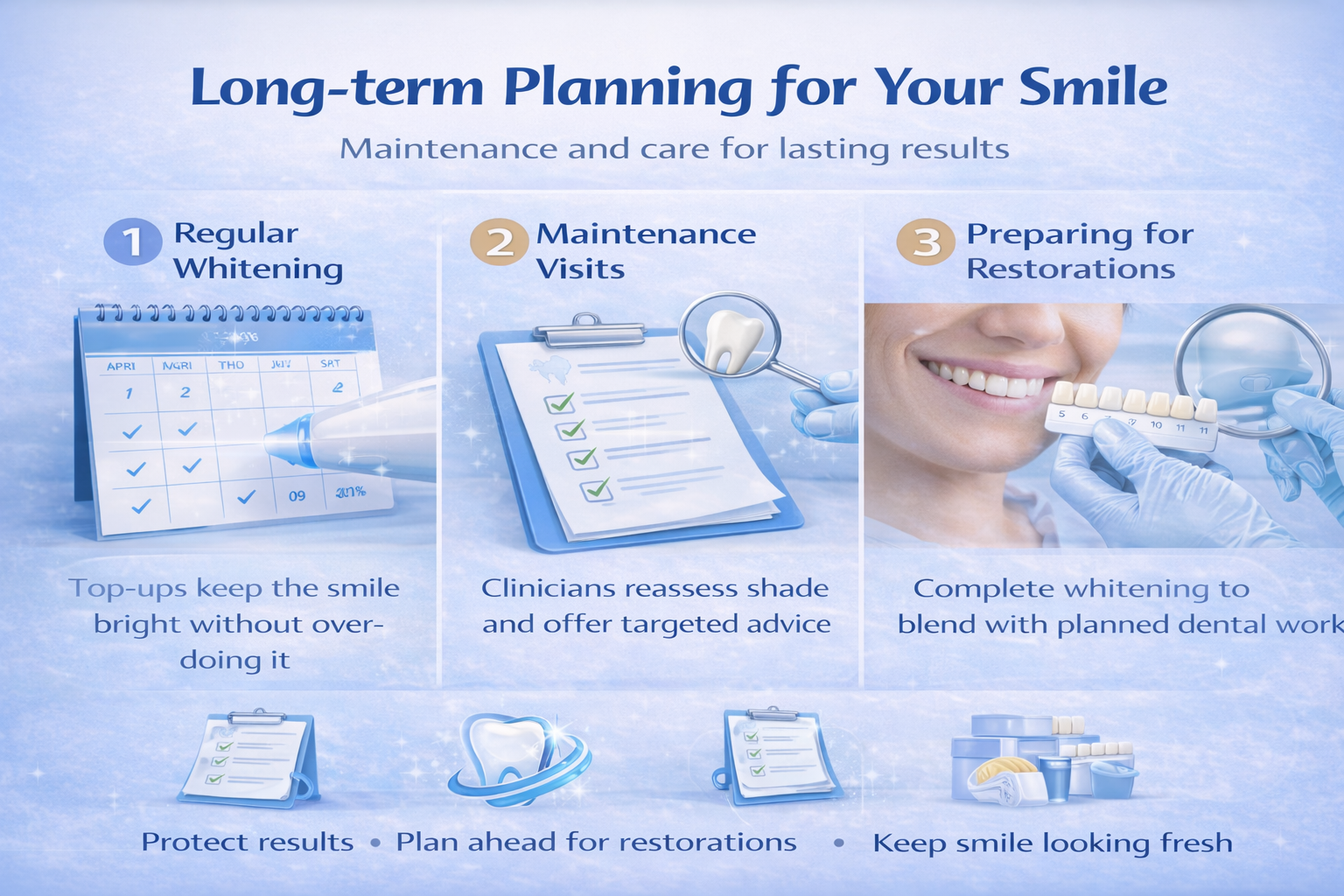
Long-term planning for your smile

Long-term Smile Planning

Long-term planning means thinking beyond a single appointment. For many people, an initial professional session followed by one or two maintenance visits per year keeps the smile bright without overdoing it. Maintenance frequency depends on personal habits: a heavy coffee drinker may benefit from a top-up every 3--6 months, while someone who rarely consumes pigment-rich foods may only need a refresh once a year. During maintenance visits, clinicians reassess shade, review oral health, and offer targeted advice so touch-ups are effective and minimally invasive.

If you plan restorative work such as veneers or crown replacement, it's often sensible to complete whitening first so the final restorations can be matched to the new tooth colour. That sequencing avoids unnecessary replacement later and helps establish a stable, attractive result. Budgeting and planning for these steps in advance gives peace of mind and ensures cosmetic changes are cohesive and predictable.

Integrating results into your lifestyle

A change in shade can feel surprisingly empowering. Often, people report being more likely to smile, attend social events, or take photos after treatment. To make the most of this effect, small lifestyle tweaks are effective: choose a water rinse after staining drinks, limit snacking on coloured foods, and carry a soft-bristled toothbrush or mouthwash for quick cleaning. If you entertain frequently, consider offering lighter-coloured food options for the hours following treatment.

Clothing and makeup choices can also accentuate the improvement: neutral or cooler tones in clothing tend to make teeth look brighter, and a simple change of lipstick shade can complement your new smile. Little adjustments like these help you capitalise on the confidence boost and maintain satisfaction with the result.

Children, teenagers, and special cases

Whitening is generally targeted at adults, because the teeth and pulp chambers in younger people are still developing. For teenagers or younger patients, clinicians usually consider alternative cosmetic options or postpone bleaching until dental maturity. In some special cases, such as a single discoloured tooth from trauma, internal bleaching performed by a clinician can be considered under strict guidance regardless of age, but only after careful assessment.

Patients with complex medical histories, orthodontic appliances, or ongoing dental treatment require a tailored approach. Clear communication with your dentist ensures any whitening fits safely with other therapies. If you're currently undergoing orthodontic treatment such as braces, whitening may be scheduled after the active braces phase to avoid uneven results caused by brackets or aligners.

Medical considerations and contraindications

There are instances where clinicians advise delaying or modifying whitening. Pregnancy and breastfeeding are commonly cited scenarios where many clinicians prefer to postpone elective cosmetic whitening as a precaution. Active oral disease, such as untreated decay, periodontal disease, or active lesions, should be addressed before bleaching. Certain medications or a history of severe allergic reactions may require medical review before proceeding.

If you have a history of root canal treatment or internal staining, your clinician will evaluate the tooth and may recommend alternative approaches. It's important to disclose full medical and dental history during consultation; that helps the clinician choose an appropriate plan and avoid unexpected reactions.

Clinical training, standards, and regulations

Quality and safety are closely related to clinical training and the standards a practice follows. Look for clinicians who work under registered dental frameworks and who can explain their training in whitening protocols. Many professional bodies guide safe bleaching practices and recommend a conservative approach prioritising tissue protection and patient comfort.

Clinics that follow written protocols for consent, shade recording, and post-treatment care are likely to deliver more predictable outcomes. Don't hesitate to ask about the clinician's experience, how they handle unusual cases, and how they document results. Clear communication and evidence of regulated practice are reassuring signs.

If you have sensitive gums or dental work

If you have sensitive gums, a receding gum line, or extensive dental work, the clinician will exercise extra caution. Gum recession can expose root surfaces, which are more sensitive and may not respond to whitening as readily as enamel. In such cases, the clinician may recommend protective varnishes, a temporary postponement of whitening in affected areas, or an alternative aesthetic approach, such as minimal restorative work. For those with extensive restorative needs, combining whitening with conservative restorative options can produce a harmonious outcome.

The use of high-fluoride pastes pre- and post-treatment, and short-term topical agents, can reduce sensitivity and support enamel recovery. Discuss your concerns openly during the consultation so the clinician can customise the plan and recommend the gentlest, yet effective, approach.

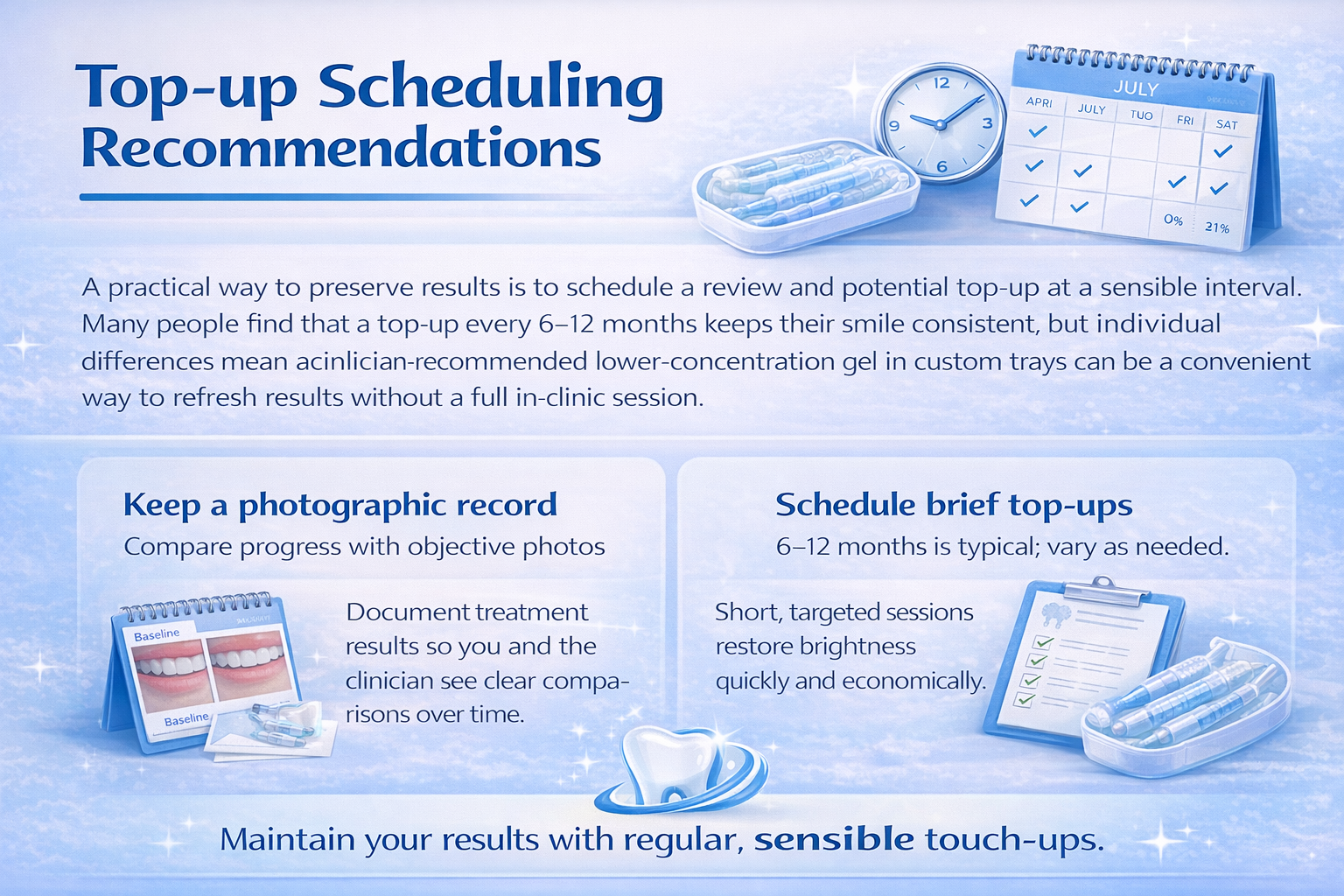
Top-up scheduling recommendations

Top-up Scheduling and Maintenance

A practical way to preserve results is to schedule a review and potential top-up at a sensible interval. Many people find that a top-up every 6--12 months keeps their smile consistent, but individual differences mean the ideal interval varies. Short at-home top-ups with a clinician-recommended lower-concentration gel in custom trays can be a convenient way to refresh results without a full in-clinic session.

Keep a photographic record so you and the clinician have objective comparisons. A brief top-up can often quickly and economically restore the initial improvement, compared with restarting a full treatment from baseline.

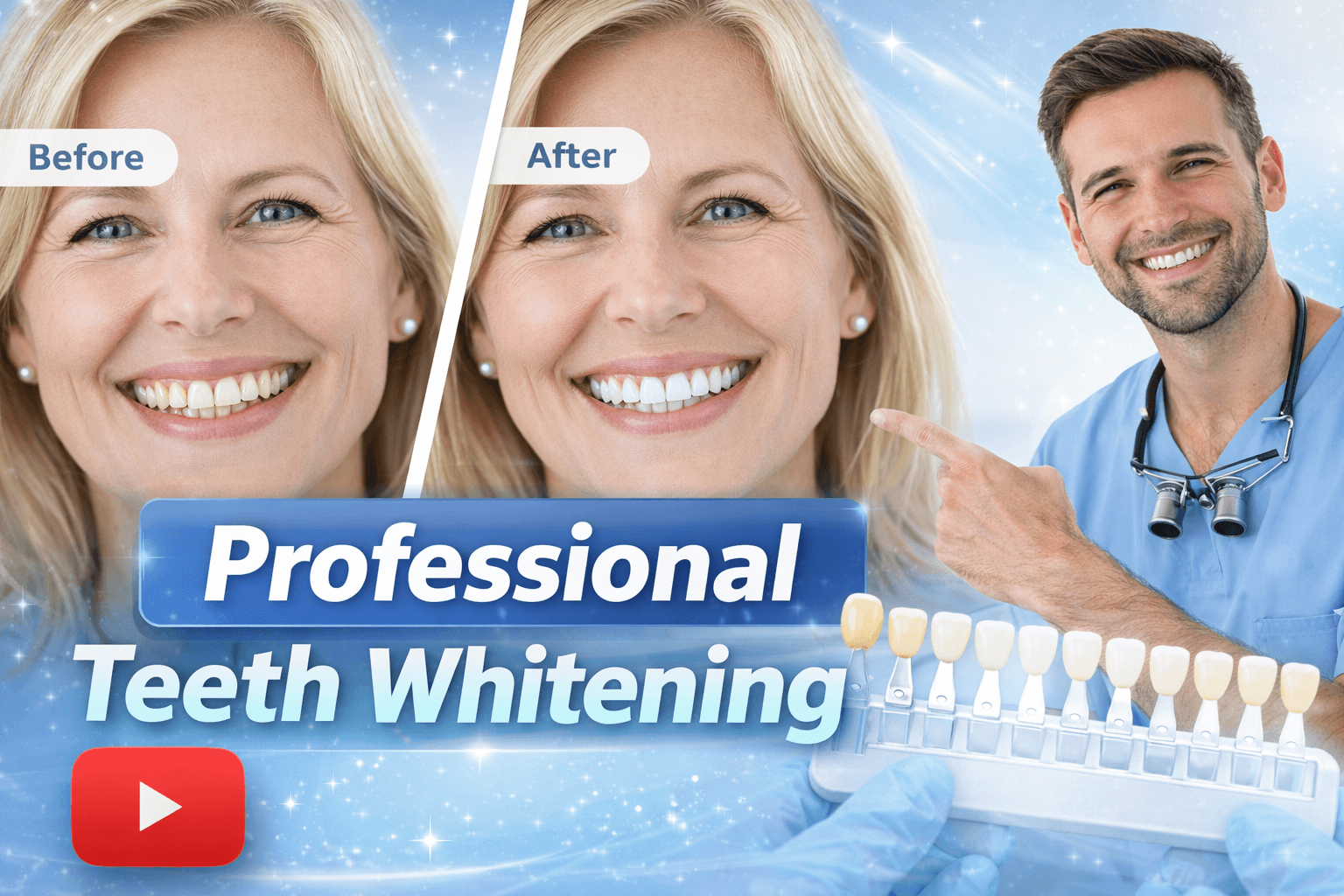
Watch YouTube Guide

Your Smile, Your Plan:

If you are considering professional tooth brightening, start with a clear consultation that assesses oral health, discusses your smile goals, and explains realistic outcomes. Professional in-clinic sessions provide rapid, supervised results and are well-suited to people who want a noticeable improvement in a single visit. For those who prefer a gentler, gradual approach, supervised at-home regimens using custom trays provide control and flexibility.

When you decide to proceed, make a list of questions and bring any relevant dental records. Plan your appointment for a time that suits your schedule and allows you to follow the initial 48-hour aftercare guidelines easily. Think about maintenance: a couple of simple habits and occasional top-ups are usually enough to keep your smile bright for years. Finally, remember that the best cosmetic decisions are the ones that fit your lifestyle and feel right for you personally; a skilled clinician will tailor the plan to suit you.

We hope this detailed guide helps you understand what to expect and how to plan. Take your time, ask questions, and choose an approach that supports long-term oral health and aesthetic improvement. Good planning makes for the most satisfying, long-lasting results.

Get in Touch

Ready to brighten your smile? Contact us today for a free consultation or to book your laser teeth whitening appointment.